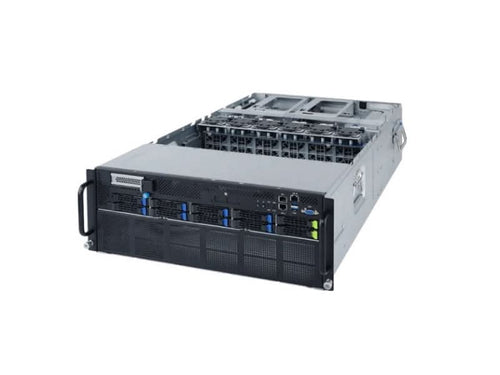
The landscape of computing is experiencing a seismic shift, driven by the rapid advancement of graphics processing units (GPUs). These powerful components, once primarily associated with gaming, have become critical to the evolution of computing architectures. The integration of GPU Servers is not just a trend but a necessity for enterprises aiming to enhance computational power and efficiency. As industries demand more complex and data-intensive applications, GPUs offer a solution that traditional central processing units (CPUs) struggle to deliver. Their ability to handle parallel processing makes them ideal for a range of applications from artificial intelligence to scientific simulations.
The Role of GPU Servers in Modern Computing
GPU servers have redefined the capabilities of modern computing by offering:
- High-performance parallel processing, significantly accelerating data-heavy tasks.
- Enhanced capabilities for Deep Learning Servers and machine learning applications.
- Improved efficiency and reduced time-to-insight in data analysis and computation.
The architecture of GPU servers allows for the simultaneous processing of multiple data streams, making them indispensable for applications that require substantial computational resources such as AI model training and high-performance computing (HPC).
Applications of GPU Servers
Artificial Intelligence and Machine Learning
In AI and machine learning, GPU servers are pivotal. Their parallel processing capabilities enable the efficient training of complex models. For instance, LLM Training Servers rely heavily on GPUs to process vast datasets, significantly reducing the time required for model development and deployment.
Scientific Research and Simulation
The scientific community benefits immensely from GPU servers, particularly in fields requiring computational simulations. These include climate modeling, astrophysics, and molecular dynamics. HPC Servers equipped with GPUs deliver the necessary power to tackle these challenging tasks, enabling researchers to achieve more accurate results in less time.
Data Analytics and Financial Modeling
Financial institutions and data analytics firms leverage the power of AI Inference Servers to process large datasets swiftly, providing real-time insights and predictive analytics that influence critical business decisions.
Future Trends in GPU Server Technology
The future of GPU technology is promising, with ongoing innovations aimed at further enhancing performance and efficiency. Key trends include:
- The integration of NVIDIA AI GPU Servers, offering superior computational capabilities and energy efficiency.
- The development of hybrid systems that combine the strengths of GPUs with traditional CPUs, expanding versatility across various applications.
- Advancements in GPU-Accelerated Servers that push the boundaries of what’s possible in real-time data processing and AI-driven applications.
The Impact of NVIDIA’s Innovations
NVIDIA continues to lead the charge in GPU technology advancements. Their NVIDIA HGX Servers are designed to optimize AI workloads, offering unparalleled speed and efficiency. These innovations are setting new standards in computing performance, paving the way for unprecedented breakthroughs in technology.
Conclusion
As computing demands escalate, the adoption of GPU servers is not just advantageous but essential. Their ability to handle data-intensive tasks with speed and efficiency makes them a cornerstone of modern computing infrastructure. From AI Servers to scientific research, the versatility and power of GPUs are shaping the future of technology, driving industries toward new frontiers of innovation and discovery. As these technologies continue to evolve, their impact on computing will undoubtedly expand, offering exciting possibilities for the future.
